 |
| October 06, 2026 | Volume 22 Issue 37 |
Designfax weekly eMagazine
Archives
Partners
Manufacturing Center
Product Spotlight
Modern Applications News
Metalworking Ideas For
Today's Job Shops
Tooling and Production
Strategies for large
metalworking plants
All-new Hyundai Tucson: Bold with a futuristic edge, also offers hybrid and new adventure models
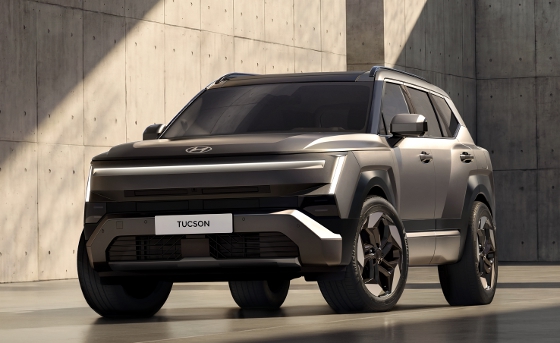
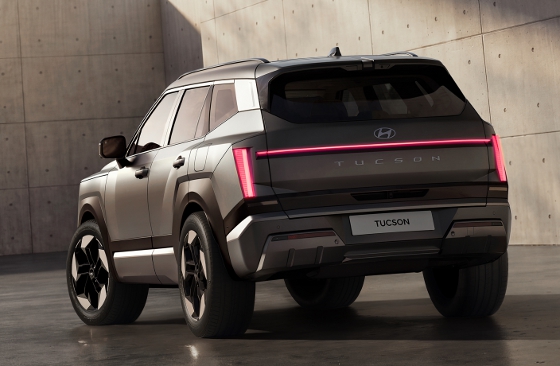
All-new 2027 Tucson gas-only model. [Credit: All images courtesy of Hyundai Motor]
Hyundai has unveiled the all-new Tucson, presenting its best-selling global SUV with a more dramatic design, a roomier cabin, enhanced hybrid technology, and a new generation of connected features. Revealed on Oct. 1 against the Manhattan skyline, the redesigned Tucson is intended to serve equally well as a family vehicle, daily commuter, and weekend adventure companion.
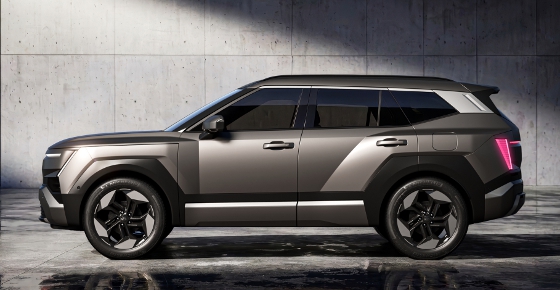
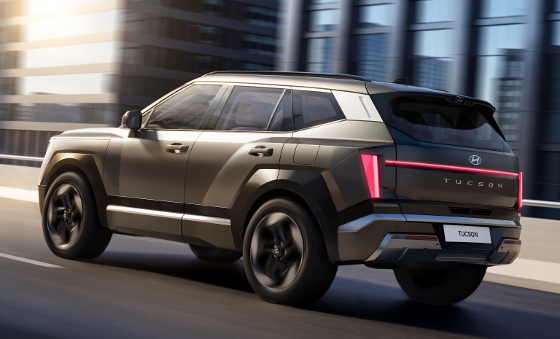
The latest Tucson introduces Hyundai's "Art of Steel" design philosophy, an upgraded hybrid powertrain (the standard powertrain plus two electric motors), the company's Pleos Connect infotainment system, and a broader model range. Alongside the standard Tucson, buyers will be offered the rugged Tucson XRT and the more capable Tucson XRT PRO. Hyundai has also confirmed that a new sport-inspired variant will make its debut at the 2026 Paris Motor Show on Oct. 12.
"Millions of families around the world count on the Hyundai Tucson, and this is the best one we have ever built," said José Muñoz, president and CEO of Hyundai Motor Company. "Its combination of bold design, generous cabin space, seamless infotainment, and available hybrid efficiency sets a new standard for what customers should expect in this segment."
--------------------------
U.S. MODELS
- Gas-Only Model: Replaces the previous 2.5-liter engine with a new 184-hp, turbocharged 1.6-liter four-cylinder engine paired with an eight-speed automatic transmission.
- Hybrid Model: Features an upgraded hybrid powertrain delivering 233 total horsepower with an estimated fuel economy of up to 42 mpg combined.
- Trim Levels & Off-Road Variants: Hyundai has confirmed standard configurations alongside the rugged XRT trim and a more capable, Tucson-first XRT Pro variant featuring increased ground clearance (8.2 in.).
--------------------------
The redesigned, long-wheelbase Tucson is larger in every direction. It measures 4,700 mm long, 1,905 mm wide, and 1,685 mm tall, while its wheelbase has grown by 30 mm to 2,785 mm. The added length and width give the SUV a more substantial stance and create additional room inside. Wider door openings (expanded from 73 to 83 degrees) should also make entry and exit easier, particularly for rear passengers and families loading children into the vehicle.
Hyundai has taken a sculptural approach to the exterior. Muscular fenders emphasize the strength and tension of steel, while crisp character lines and relatively restrained door surfaces give the Tucson a purposeful, modern appearance. The front-end design has also been developed to support improved pedestrian protection and forward-collision performance.
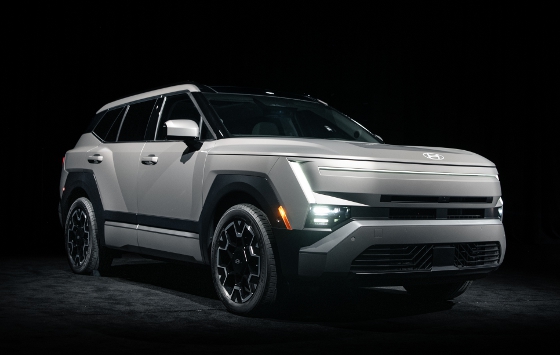
All-new 2027 Tucson Hybrid model.
The Tucson's new lighting signature combines indirect center illumination with edge lighting in what Hyundai calls H-Edge lighting. The arrangement makes the vehicle appear wider and more planted. At the rear, three-dimensional Prism Rear Lamps create the impression that the lighting is resting along the edge of a transparent lens.
Available Micro Pixel Lighting adds 25,600 individual LED pixels. The system can produce precise beam patterns, rain guidance, and animated welcome and farewell sequences. Standard LED headlamps use a two-in-one module design, while LED taillamps are standard across the lineup.
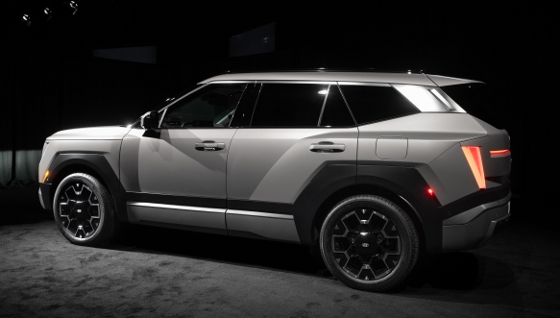
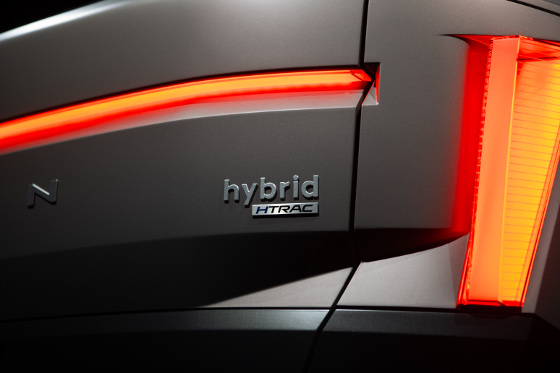
New exterior colors include Ranger Green Pearl or Matte, Kodiak Blue Pearl, Driftwood Gray Metallic or Matte, and Red Rock Orange Pearl or Matte, alongside Serenity White Pearl. Hyundai says the green, blue, and gray finishes can produce subtle color-shifting effects as light moves across the SUV's sculpted bodywork.
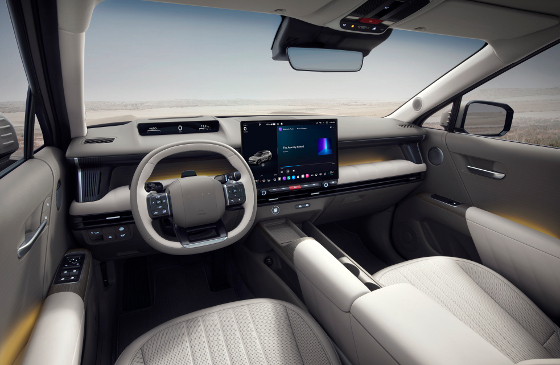
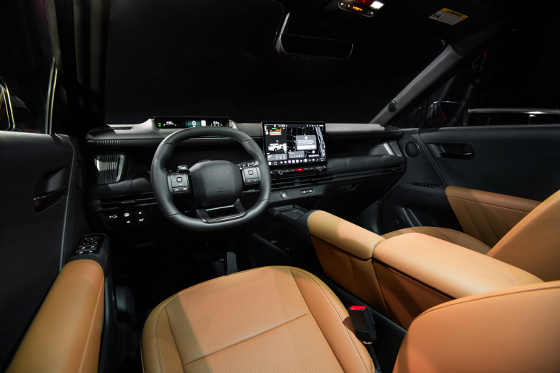
Inside, the Tucson adopts a furniture-inspired layout focused on openness and intuitive operation. A two-layer dashboard separates visual structure from practical functions. The upper section stretches horizontally to create a broad, uncluttered appearance, while a lower tray provides additional storage. Soft-touch cushioning extends across the dashboard, doors, and center-console armrest.
The driver faces a Double D-Cut steering wheel and a slim 9.9-in. display positioned above the steering column. Tactile buttons beneath the central screen provide direct access to commonly used climate and audio controls. A steering-column-mounted Shift-By-Wire selector simplifies gear selection, while an illuminated gear indicator and one-button park function help keep the driver's attention focused forward.
The long-wheelbase Tucson offers up to 1,036 mm of front headroom, 1,064 mm of rear legroom, and 1,470 mm of front shoulder room. Available comfort features include an Ergo Motion Seat with seven-cell pneumatic lumbar support and bolster massage. A four-link Relaxation Comfort Seat can recline by 10 degrees at the push of a button when the vehicle is parked.
Other cabin features include dual 15-W wireless charging pads, hidden storage, and a Multi-Air Mode System that distributes conditioned air through the main vents, smaller multi-vents, and floor-level outlets. An available three-zone climate system allows front and rear occupants to set their temperatures independently. A heated, metal-coated windshield can fully de-ice in 15 minutes and reject 60% of solar energy, helping keep the cabin up to two degrees cooler in hot weather.
The next-generation hybrid system is designed to balance efficiency, acceleration, and refinement. In two-wheel-drive form with 17-in. wheels, the Tucson Hybrid targets up to 42 mpg and can accelerate from zero to 60 mph in 8.5 seconds.
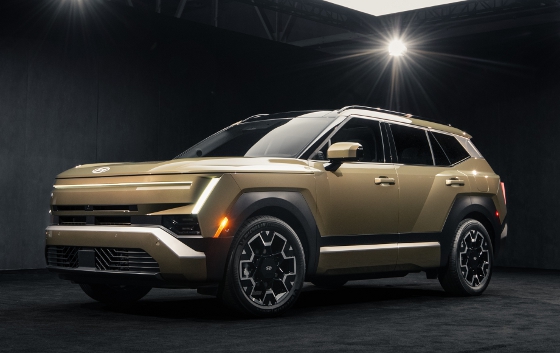
All-new 2027 Tucson Limited model.
An E-Traction system exclusive to hybrid models improves grip while cornering by optimizing driving torque and increasing traction at the inside tire. HEV Stay Mode allows the climate system, audio, and device charging to continue with the gasoline engine switched off, delivering an electric-vehicle-like experience during breaks, outdoor activities, or waiting periods.
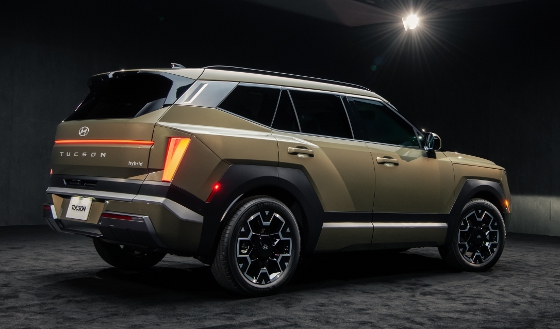
The conventional Tucson uses a 1.6-liter turbocharged engine producing 184 hp. It sports an eight-speed automatic transmission. A standard Hybrid model will be available, as mentioned. However, for the time being, a Tucson Plug-in Hybrid will not be offered in North America.
The new Pleos Connect infotainment system uses Android Automotive OS and pairs a 17-in. or 12.9-in. central touchscreen with the slim 9.9-in. driver display. Three-finger gesture controls and a single-screen mode are intended to make information easier to access without forcing drivers through complex menus.
Pleos Connect is powered by Gleo AI, an in-vehicle agentic artificial intelligence system capable of understanding natural-language requests and user context. A driver could, for example, ask it to locate a hiking trailhead with parking within 30 minutes. The system also supports native third-party entertainment, productivity, and gaming services without requiring smartphone mirroring. Over-the-air updates will allow the software to evolve over time.
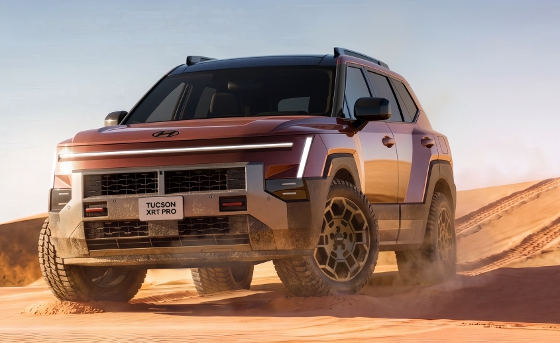
All-new 2027 Tucson XRT PRO model.
Safety equipment includes hot-stamped high-strength steel, reinforced center pillars, and multi-point collision energy management. Improved insulation, sealing, aerodynamics, and acoustic engineering are intended to create a quieter cabin.
Available driver-assistance systems include Intelligent Speed Limit Assist, Navigation-Linked Smart Cruise Control, Lane Following Assist, and Level 2-plus assisted-driving functions for highway and urban use. An In-Cabin Monitoring Unit can detect eye activity and drowsiness, while Child Presence Detection and Rear Occupant Alert can warn if children or pets are left behind.
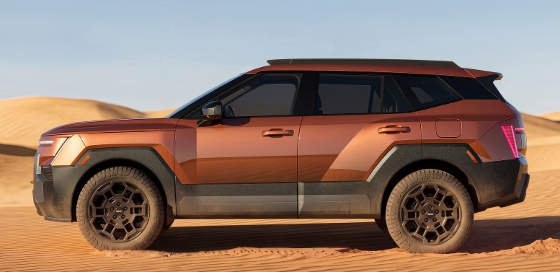
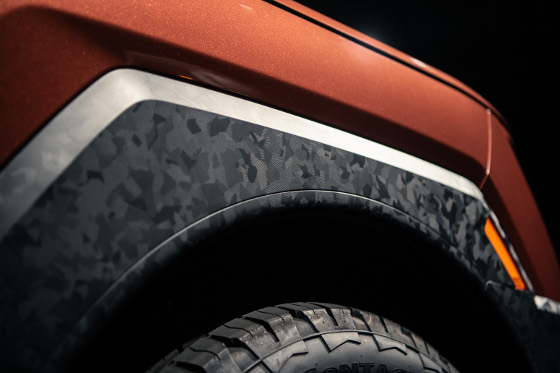
The Tucson XRT brings a tougher appearance with wider front cladding, black wheel-arch protection, forged-carbon-inspired details, redesigned bumpers, and skid plates. Dark interior finishes and unique seat treatments reinforce its outdoor character.
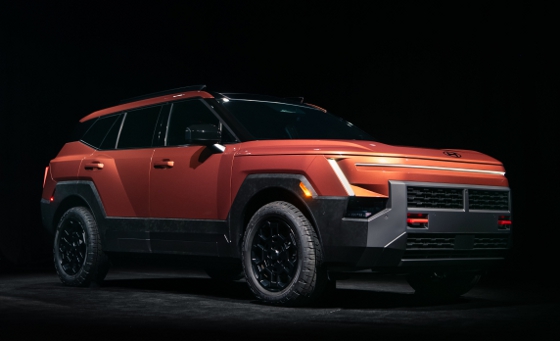
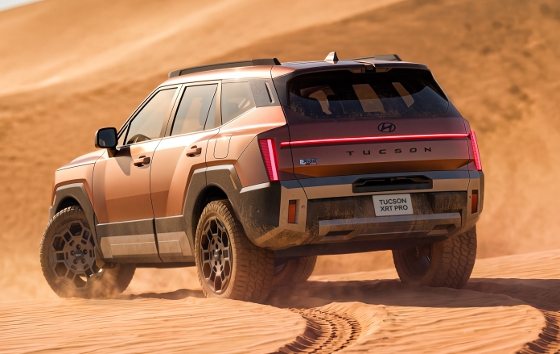
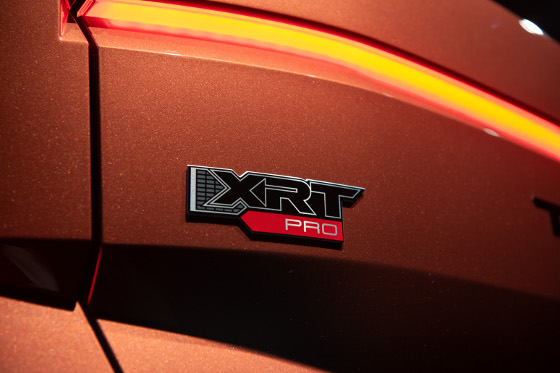
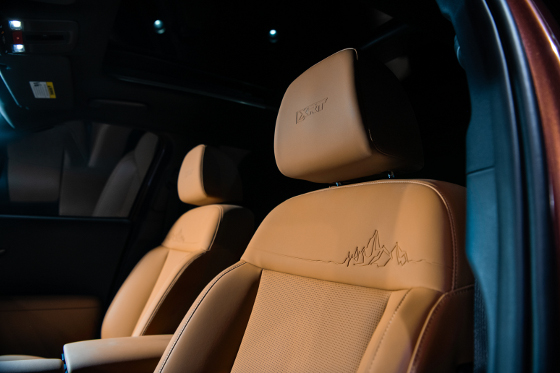
At the top of the adventure range, the Tucson XRT PRO adds all-wheel drive, all-terrain tires, front recovery hooks, more aggressive approach and departure angles, and 210 mm of ground clearance -- 30 mm more than the standard model. It also features expanded lower-body cladding, exclusive wheels, dark metal accents, and XRT PRO seat logos.
The XRT PRO is the only Tucson equipped with Hyundai's Smart Terrain Assist. The system evaluates traction and wheel slip in real time and displays a green, orange, or red "stuck score." Target Speed Control manages acceleration and braking between 2 and 25 km/h according to terrain conditions. Other available technologies include Memory Reversing Assist, Ground View Monitor, and Trailer Reverse Assist.
In North America, the Tucson Hybrid can tow up to 3,000 lb, an increase of 1,000 lb over the outgoing model.
Pricing has not been released. A 2026 Tucson base price started at $29,700.
Learn more at hyundaiusa.com/us/en/vehicles/2027-tucson.
Source: Hyundai Motor
Published October 2026
Rate this article
View our terms of use and privacy policy